
The Year in Review
A snapshot of the year
The milestones, leadership perspectives and headline metrics of 2025 — the final year of our first Plan for Change.
Message from the Group CEO
Five years that defined our direction
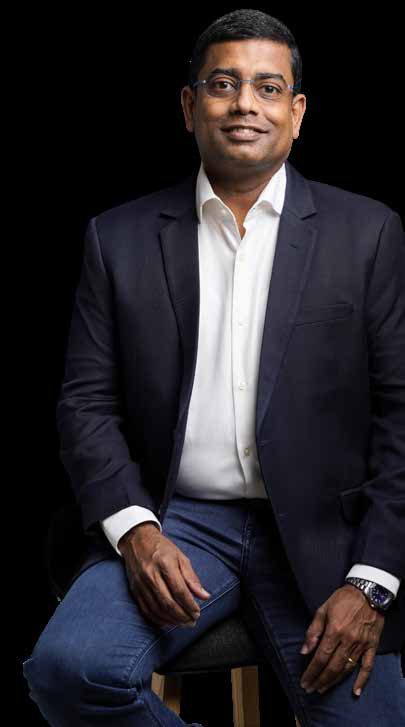
Suren Fernando
Group CEO
“Sustainability is a defining force that shapes how we position ourselves for the future.”
The past five years have been among the most defining in MAS' journey. While the global disruption of COVID-19, the economic crisis in Sri Lanka, and continued volatility across our key markets shaped and forged us, it also tested the resilience of our organisation and the clarity of our long-term direction.
Today, sustainability is fully integrated into how we operate as a business. It is now a defining force that shapes how we position ourselves for the future, determining how we compete, respond to external shifts, and allocate capital across our operations.
Our Plan for Change (2020–2025) played a pivotal role in this shift. It brought greater structure, discipline, and accountability to our sustainability efforts. As a result, sustainability now lies at the core of our business model.
Looking ahead, our Plan for Change 2030 is centred on future-proofing MAS in a rapidly evolving global landscape. Our priorities span three core areas: embedding sustainability by design into our products and processes, advancing a climate- and nature-positive value chain, and empowering the lives of our people and the communities we serve.
Message from the Head of Sustainable Business
From individual initiatives to an enterprise-wide plan

Amanthi Perera
Head of Sustainable Business
“Real change can only be achieved by combining our strengths.”
In 2020, we launched the Plan for Change — an enterprise-wide roadmap designed to formalise this journey, embedding sustainability more deeply into our core business and establishing a consistent and accountable framework to guide our efforts over time.
Over time, what we once achieved through individual initiatives is now more closely integrated into how we operate. Today, sustainability considerations shape decisions, partnerships, and the way we work from day to day.
As a result, 46% of our revenue is now derived from sustainable products. We sustained our zero waste to landfill performance while achieving 76.9% waste value enhancement, and renewable energy reached 42% of total consumption.
Biodiversity conservation remains a key priority. Through efforts including a pioneering aerial reforestation programme with the Sri Lankan Air Force, we have exceeded our original target of 25,000 acres, restoring over 25,800 acres to date.
Progress to Plan
Commitments, translated into measurable outcomes
Tracking our progress against defined goals, translating commitments into measurable outcomes across our key impact areas.
Revenue from sustainable products
46% / target 50%
Primary products with recycled input materials
15% / target 20%
Women in management
26% / target 30%
Persons with disabilities employed
436 / target 500
Decrease in absolute emissions (Scope 1 & 2 vs 2019)
25.44% / target 25.2%
Suppliers (by spend) committed to science-based targets
53% / target 85%
Energy from renewable sources
41% / target 100%
Reduction in textile water intensity (vs 2011)
40.3% / target 65%
Waste value enhanced
76.9% / target 80%
Waste diverted from landfill
99% / target 99%
ZDHC MRSL-compliant chemicals
99% / target 100%
bluesign®-approved chemicals in dye facilities
97.2% / target 100%
Acres restored or conserved
25811 / target 25000
Milestones across the Plan for Change
Five years of progress, pillar by pillar
The defining moments of our 2020–2025 journey across Products, Lives and Planet — each a step toward embedding sustainability into the core of our business.
Products
2022
Invested in HeiQ AeoniQ™ cellulosic yarn technology.
2023
Signed an off-take agreement with Ambercycle for Cycora® regenerated polyester.
2024
Completed wearer trials using AeoniQ fabrics.
2025
Progressed customer-led collections using circular materials.
Lives
2020
Introduced crisis-response protocols and privately managed care centres during COVID-19.
2021
Rs. 100 Mn to Manudam Mehewara via Sarvodaya; launched the MAS DNA ethics hotline; expanded D&I to include SOGIESC.
2022
TL/GL Technical Skills Development — 89% completion, 100% retention; 21 Gold Awards from RoSPA.
2023
Rehabilitated 857 employee homes after extreme weather; signed an MoU with UNFPA on women's health.
2024
Introduced Supported Employment for persons with disabilities; launched the Social Sustainability Score Tool.
2025
Women in management 26% (from 21% in 2019); Board representation 21% (from 8% in 2018); Gold DEI Champion of the Year.
Planet
2020–21
Established climate and resource baselines; began chemical & wastewater compliance monitoring.
2022
MAS Fabrics Intimo became a bluesign® System Partner.
2023
MAS Fabrics Intimo became a bluesign® article-delivering facility.
2024
Achieved 25.2% Scope 1 & 2 reduction; secured validation for a long-term SBTi Net-Zero target.
2025
Restored 25,811 acres (exceeding the 1:100 goal); Gold ESG Sustainability Champion of the Year.
Our Sustainability Journey
From doing the right thing to a regenerative future
Before 2015
Foundation of Doing the Right Thing
- Early adoption of ethical manufacturing practices
- Focus on employee wellbeing and progressive workplace standards
- Initial investments in resource efficiency and compliance
2015–2019
Embedding Sustainability
- Group-wide goals across Product, Lives and Planet
- Sustainability integrated into core operations and strategy
- Expansion of environmental management systems
2020
Launch of Plan for Change
- Shift from an initiative-based to a target-driven approach
2021–2022
Building the Framework
- Baselines, measurement systems and governance structures
- Strengthened transparency, disclosures and value-chain integration
- Early momentum in renewable energy, waste and social impact
2023–2024
Scaling Impact
- Acceleration of renewable energy and operational efficiency
- Strategic investments and partnerships in circular materials
- Increased adoption of global frameworks and certifications
2025
Advancing Towards Targets
- Key milestones across climate, circularity and social impact
- Progress towards SBTi-aligned emissions reduction
- Strengthened inclusion, community impact and ESG recognition
2025 →
Plan for Change 2030
- Scaling proven initiatives across operations and the value chain
- Embedding science-aligned targets and data-driven decisions
- Transitioning towards a regenerative, resilient business model