
Impact Review · Foundation
MAS Foundation for Change
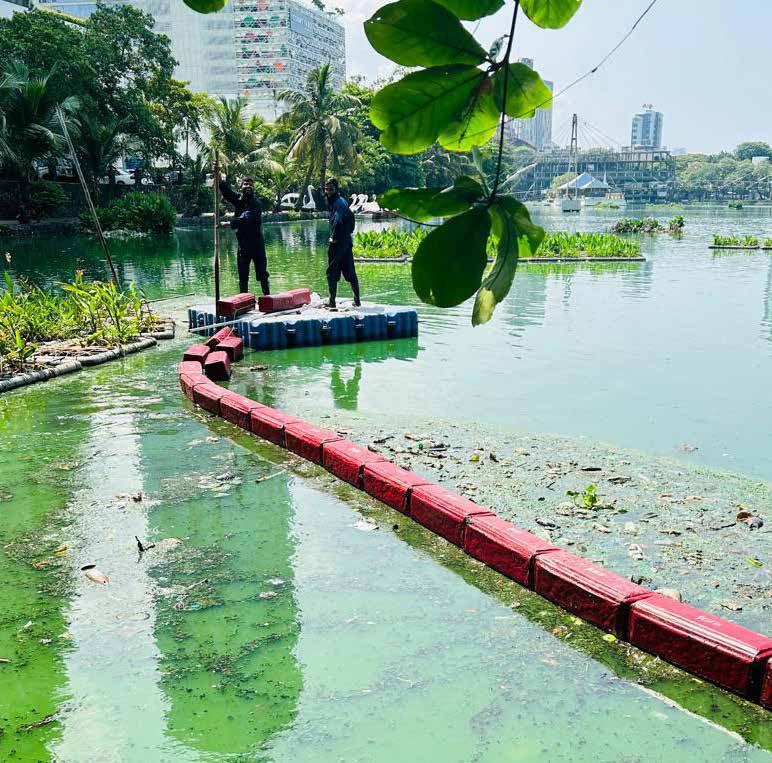
The MAS Foundation for Change addresses large-scale environmental challenges beyond our operations through scalable, partnership-led interventions — preventing pollution, restoring ecosystems, and improving access to clean water.
Tackling pollution beyond our operations
Scalable, partnership-led environmental interventions
Governance & structure
A purpose-built entity for environmental change
How the Foundation is constituted
Incorporated in April 2022 as a Company Limited by Guarantee by MAS Holdings and MAS Capital, and registered with the National NGO Secretariat of Sri Lanka. Operations began in September 2022 under Executive Director Sharika Senanayake.
The three pillars of focus
- Cleaner Oceans
- Life on Our Planet
- Access to Water
How it works
Intercept, measure, recover
A closed-loop methodology that turns intercepted waste into verifiable data and recoverable material.
- 1
Intercept
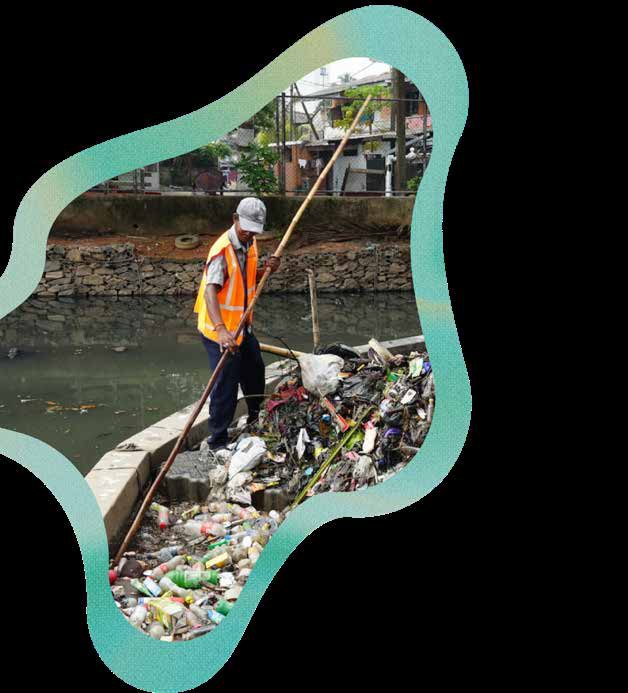
Capture floating waste upstream in rivers, canals and drainage points before it reaches the ocean.
- 2
Measure
Record and analyse waste sources, composition and flow against OSPAR (with CEFAS, UK) and JICA methodologies.
- 3
Recover
Sort and redirect captured material into recycling and reuse — including upcycled Silueta Blocks.
Partnership-led interventions
From interception to insight and recovery
Ocean Strainer™ Network
Waste is captured upstream across rivers, canals and drainage points before reaching the ocean — now at 100 units nationwide, each functioning as a monitoring point aligned with OSPAR and JICA methodologies.
Upcycled Strainer Block
Recovered plastic converted into usable construction material (Silueta Blocks), transitioned in 2025 from pilot to a commercially viable product supporting circular-economy objectives.
Material Recovery Facilities
Preparatory work toward MRF models to improve sorting of intercepted waste, increase recovery of recyclables, and reduce reliance on landfill disposal.
Life on Our Planet
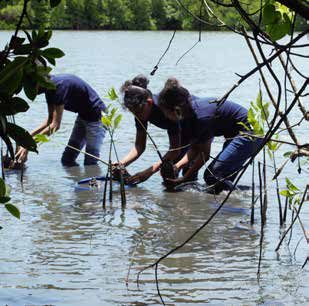
Restoring and protecting mangroves, lagoons and inland water bodies — supported by upstream waste interception that helps prevent restored areas from being polluted again.
Looking ahead
Scaling proven interventions with greater rigour
Advancing interception & reuse solutions, including research-oriented Ocean Strainer designs.
Enhancing data credibility through third-party verification and potential financing mechanisms.
Strengthening urban waste systems via Material Recovery Facility partnerships.