
Impact Review · Planet
Our Planet Changed for Good
Our Planet Changed for Good aligns growth with climate action — reducing environmental impact while strengthening long-term resilience. Our approach is guided by science-based targets and a clear focus on decarbonisation across operations and the value chain.
Climate & nature at a glance
Growth aligned with climate action
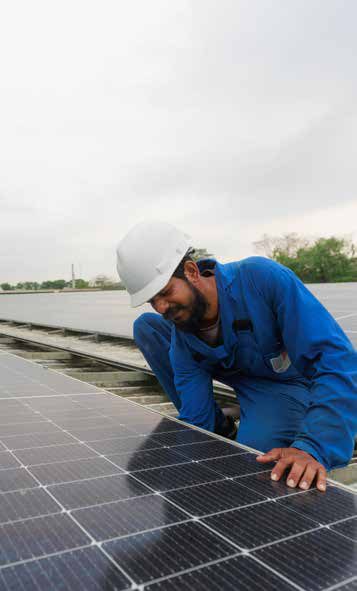
Performance against targets
Each metric measured against its Plan-for-Change target
Limit Emissions
Where our footprint sits — and where we act
We achieved a 25.44% reduction in Scope 1 & 2 emissions against the 2019 baseline, exceeding our near-term science-based target. Scope 3 dominates the footprint, making value-chain engagement central to our roadmap.
Total operational & value-chain footprint
Group greenhouse-gas emissions across Scopes 1, 2 and 3 (2025).
- Scope 1 & 211.23%
- Scope 388.77%
Emissions by scope
- Scope 16.9%
- Scope 24.33%
- Scope 388.77%
Scope 1 & 2 reduction trend
| Year | Reduction vs 2019 |
|---|---|
| 2020 | 7.40% |
| 2021 | 19.20% |
| 2022 | 8.52% |
| 2023 | 20.37% |
| 2024 | 24.04% |
| 2025 | 25.44% |
Inside Scope 3
- Purchased goods & services62.41%
- Downstream transport & distribution17.36%
- Upstream transport & distribution6.67%
- End-of-life treatment5.28%
- Employee commuting3.95%
- Fuel- & energy-related2.29%
- Other categories1.64%
Scope 3 progress
Gross Scope 3 fell 11.13% year-on-year to 1,089,514.62 MtCO₂e.
Net Zero by 2048
A science-based roadmap to net zero
MAS has set a formal decarbonisation roadmap to Net Zero by 2048, anchored by validated science-based targets for 2030.
The decarbonisation timeline
- 2019Baseline year
Restated to 134,272.14 MtCO₂e under SBTi Near-Term Criteria; reported on the new baseline from 2026.
- 2030Near-term targets
80% absolute reduction in Scope 1 & 2 and 46.2% reduction in Scope 3.
- 2048Net Zero
90% absolute reduction across Scopes 1, 2 & 3 and 100% renewable electricity.
Six decarbonisation pillars
- Operational energy efficiency
- Renewable energy transition
- Sustainable materials & products
- Circularity & waste
- Value-chain decarbonisation
- Governance & accountability
Governance & accountability
CEO, CSO and Divisional CEO bonuses are explicitly linked to absolute emissions-reduction targets, with bi-annual SAC oversight.
Climate Risk
Quantifying physical and transition exposure
Physical and transition climate risks are integrated into enterprise risk management, with financial exposure quantified across operations and capital plans.
Flooding
Acute risk at Bodyline Horana, Linea Aqua Hanwella and Biyagama EPZ.
Drought & water scarcity
Jaffna Peninsula facilities and Tier-2 weaving/dyeing in China, India, Indonesia, Taiwan.
Heat stress
Higher cooling costs across Bangladesh, India, Indonesia, Jordan and Sri Lanka.
Regulatory transition
EU Border Carbon Adjustment, Digital Product Passport and PEF compliance costs.
Energy Transition
Scaling renewables across operations
Total energy consumption fell 4.01% to 1.52 Mn GJ, with renewables reaching 40.1% of the mix. Project Photon delivers 22.84 MW of rooftop solar across 19 facilities.
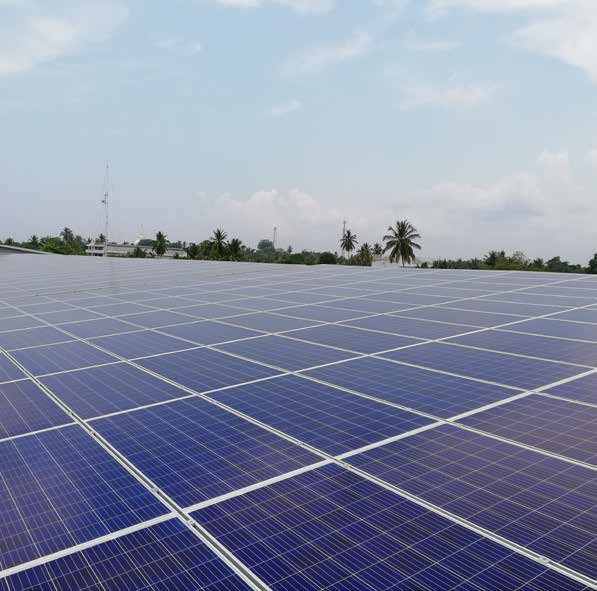
Renewable energy mix
- Biomass80%
- Rooftop solar11%
- REC (Indonesia)7%
- PPA (India)2%
Efficiency in action
Grey-dyeing process innovation
TEXO
Replacing black dyeing with optimised grey dyeing cut power ~28%, thermal energy ~29%, water ~19% and processing time ~23% — with no machinery change.
Compressed-air & heat-seal upgrades
MAS Intimates
Saved 656,339 kWh and USD 62,326 annually, with a 3.6% water reduction.
Smart energy management
MAS Silueta
Induction-heating conversion across 38 machines saved USD 41,150/yr and removed 90 tons of excess cooling capacity.
Compressor optimisation
MAS KREEDA
Leak repair and pipeline resizing targeting a 25–29% reduction in compressor energy consumption.
Biomass certification
A biomass certification programme under SLS 1551 is engaging the top 10 of 400 suppliers, targeting third-party audits and certification in 2026.
Transform Waste
Designing waste out of the system
Total waste rose to 25,096.70 MT, of which 98.6% was diverted from landfill and 76.9% value-enhanced. Over 55% was recovered through reuse and recycling.
Waste composition
- Non-hazardous raw-material waste69%
- Non-hazardous non-RM waste27%
- Hazardous waste4%
Disposal & recovery routes
- Recycling38%
- Energy recovery25%
- Waste-to-steam19%
- Reuse17%
- Landfill1%
Waste value-enhanced trend
| Year | Value-enhanced |
|---|---|
| 2022 | 63.8% |
| 2023 | 70.5% |
| 2024 | 76.2% |
| 2025 | 76.9% |
Circular waste in practice
Foam waste repurposing
MAS Silueta
Laminated foam offcuts are crushed, baled and reused as secondary raw material in mattress manufacturing — a local circular value chain.
Reusable packaging
MAS Kreeda
Closed-loop crate systems cut cardboard waste by 1,056 kg/year.
Safeguard Water
Stewarding water across operations and communities
Recycled water rose 60% to 316.43 ML, with textile water intensity down 40% against the 2011 baseline. MAS does not withdraw water from water-stressed areas.
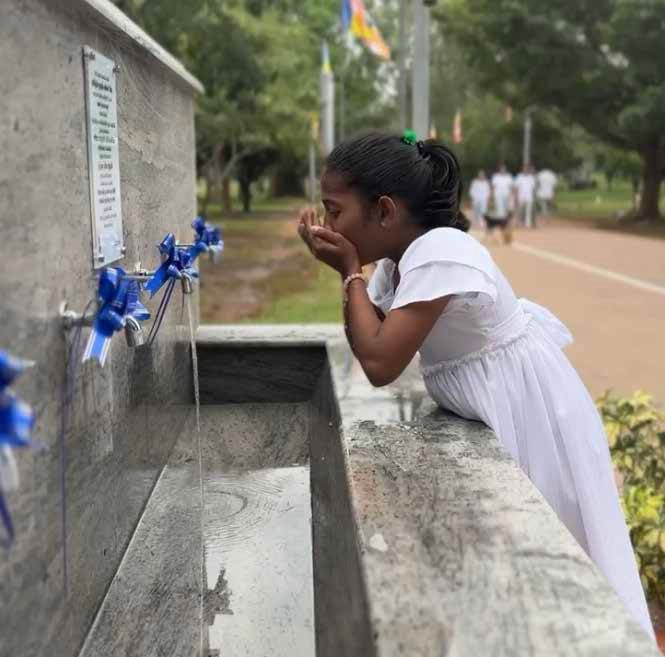
Community water projects
Anuradhapura Pooja Bhoomiya
An RO plant delivering 15,000 L/day serving 200,000+ daily users, maintained with the Sri Lanka Navy.
Aluthwewa Maha Vidyalaya
A 2,000 L/day RO system for 750+ students and teachers under 'Water for All'.
Pingamuwa Maha Vidyalaya
Deepened well and storage expanded from 500 L to 1,500 L for 150 students and 20 staff.
Champion Biodiversity
Restoring 103× the land we occupy
We surpassed our 1:100 commitment, restoring 25,811 acres — 103× the land we occupy — through restoration, conservation, invasive-species removal and analog-forest concepts across Sri Lanka, Indonesia and Kenya.
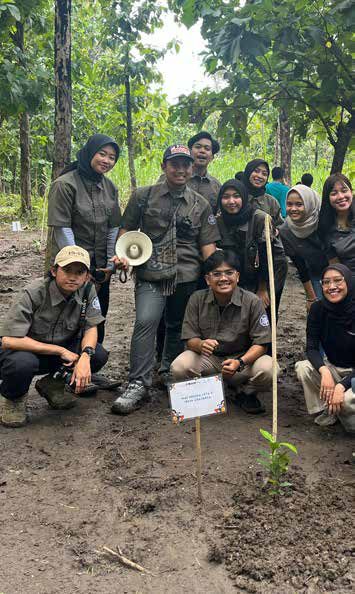
Acres restored or conserved
| Year | Acres |
|---|---|
| 2022 | 9,651 |
| 2023 | 12,705 |
| 2024 | 19,977 |
| 2025 | 25,811 |
“We surpassed our 1:100 commitment, restoring over 25,800 acres to date.”
Flagship conservation projects
Sustainable Forest Management — Central Java
KHDTK–UGM, Indonesia · 12,701 acres
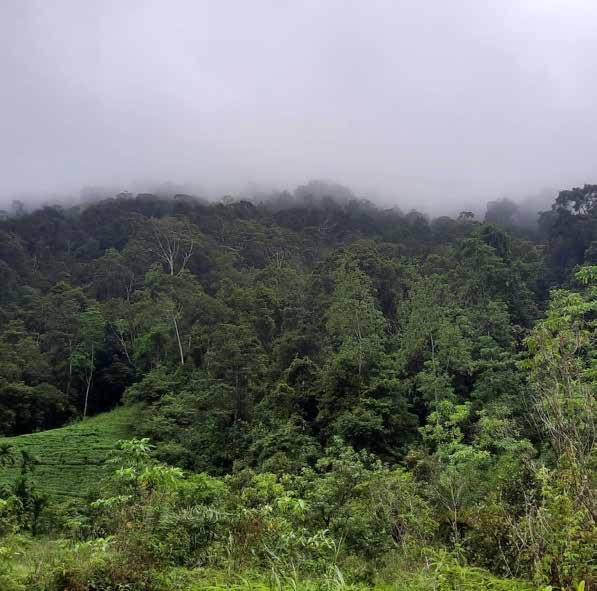
MAS' largest restoration programme, with the University of Gadjah Mada — 41,106 seedlings planted at ~90% survival across Java long pepper, gliricidia, coffee and candlenut.
Suduweli Ara Elephant Corridor
Hambegamuwa, Sri Lanka · 50 acres
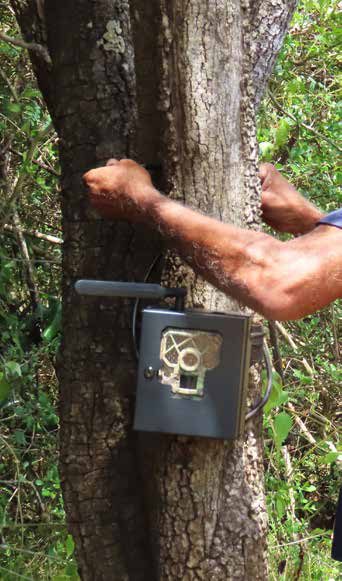
Restoring an elephant corridor adjoining Udawalawe National Park with the Tropical Ecosystem Research Network, using drones and camera traps.
Thuruwadula Analog Forest
MAS Fabric Park · 9.7 acres
An open field in 2013 is now a structurally complex forest hosting 107 species — 18 endemic, including the Golden Palm Civet and Purple-faced Langur.
IAPS Removal — Lunugamvehera
Sri Lanka · 1,545 acres
A 2021–2025 programme with the Department of Wildlife Conservation removing Lantana and Eupatorium, regenerating native grassland and supporting 30–60 community livelihoods.
Wet Zone Leopard Conservation
Galle, Sri Lanka
Protecting the endangered wet-zone leopard with the Wildlife Conservation Society — Galle; winner of the Best Sustainability Project Award 2025.
MAS Fabric Park
Circular infrastructure at scale
MAS Fabric Park is an industrial ecosystem that demonstrates circular infrastructure at scale — water, energy, waste and biodiversity managed together.